•Runoff and
Phosphorus
load for
forest
and
residential land
| A land area cleared for agricultural, residential, or
commercial use contributes more to nutrient loading than a naturally
vegetated area, such as forested land (Dennis1986). The combination of vegetation removal and soil compaction
involved in the clearing of land results in a significant increase in surface
runoff, which amplifies the erosion of sediments carrying nutrients and
pollutants of human origin. |
|
| Naturally vegetated areas offer protection against
soil erosion and surface runoff (Firmage, pers comm). The forest canopy reduces erosion by
diminishing the direct physical impact of rain on soil. The root systems of trees and shrubs
reduce soil erosion by decreasing the rate of runoff, allowing water to
percolate into the soil. Roots
decrease the nutrient load in runoff through direct absorption of nutrients
for use in plant structure and function. Due to these features, a forested area acts as a buffering
system by decreasing surface runoff and absorbing nutrients before they enter
water bodies. |
|
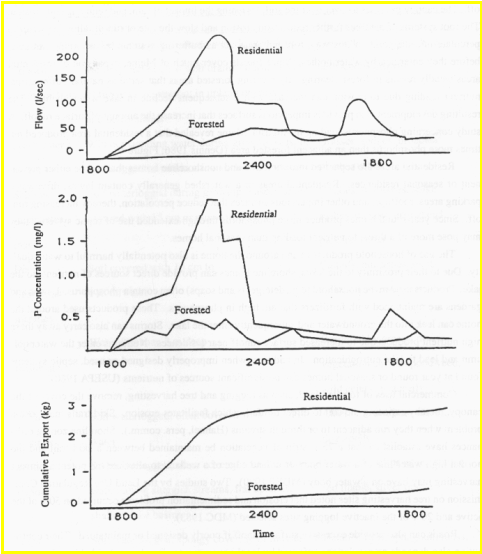
| Evidence of increased surface runoff due to development
and consequent effects on nutrient transport is presented in a study
concerning phosphorus loading in Augusta, Maine (Figure IIB2a). The study revealed that surface runoff
from a residential area contained ten times more phosphorus than runoff from
an adjacent forested area. The
study concluded that the surface-runoff flow rate of residential area can be
in excess of four times the rate recorded for forested land. Top: volume of
immediate runoff over a 12 hour period; Middle: phosphorus concentration in
the runoff; Bottom: total amount of phosphorus exported into local streams
and lakes from the storm (Dennis 1986). |
|
| Activities that remove the
cover of the canopy and expose the soil to direct rainfall increase
erosion. Two studies by the Land
Use Regulation Commission on tree harvesting sites noted that erosion and
sedimentation problems occurred in 50 percent of active and 20 percent of
inactive logging sites selected (MDC 1983). Skidder trails may pose a problem when they run adjacent
to or through streams |
|