
Road Survey
•Impervious surfaces
ßDirect path for runoff
ßDeposit nutrients and contaminants into lakes
ßIn some watersheds, up to 80% of phosphorus loading is attributed to roads
•Non-detailed survey      paved roads
•Detailed survey     camp roads
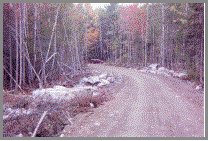
The last component I will discuss is roads and their impact on water quality.
Roads are impervious surfaces that provide a direct path for water run off and can deposit nutrients and contaminants into a lake.
In fact, in some watersheds, up to 80% of phosphorus loading is attributed to roads.
CEAT conducted a non-detailed road survey on paved roads were we simple measured the length and width of each road while at the same time looking for problematic areas, such as site with evidence of erosion.

A more detailed survey was conducted on camp roads (dirt roads) within the watershed.  Camp roads can be especially detrimental to water quality because they are composed of sediments that hold large quantities of phosphorus.  Heavy rains can then carry these sediments into the lake, adding those nutrients to the water.