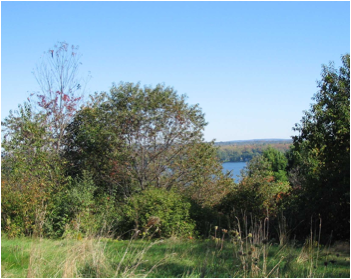
¥Marginal runoff and erosion control ¥Residual phosphorus from previous agricultural
land use ¥3.3% of watershed land area in
2003 ¥Down from 9.3% in 1965
Reverting land is defined as
an area that was once agricultural, but now lies fallow and trees are
beginning to grow back.There
are shrubs and small trees that control runoff and erosion.However, reverting land often has
residual herbicides, pesticides, fertilizers, and manure that can get into
the groundwater or can be carried into the lake during storms.
When the land was left
fallow in 1965, it was probably allowed to grow into forest, but more
recently, some of the reverting land may have been converted into commercial
or residential areas.The
decrease in reverting land is advantageous to the lake.It means that the most of the land
that was once identified as reverting has now become forested over the 38
years.The higher density of
trees helps control erosion and runoff while absorbing many of the nutrients
that were left in the ground from the fertilizers and manure, keeping
nutrients from reaching the lake.