|
|
|
Land use patterns in Rome,
Belgrade, and Vienna are all showing positive patterns of change. More forest
and less agriculture means a lot less phosphorous running off into the lake.
These patterns need to be continued, and even improved upon.
|
|
|
|
Tax maps show several
hundred approved lots within 1000 feet of the shore which are still
undeveloped. Action can still be taken to preserve these lots or limit their
development.
|
|
|
|
Of all the different land
uses, septic systems contribute the most phosphorous. Luckily, repairing them
is relatively easy. Prevention via town bylaws will be the most effective way
to limit septic system�s influence on the lake in the future.
|
|
|
|
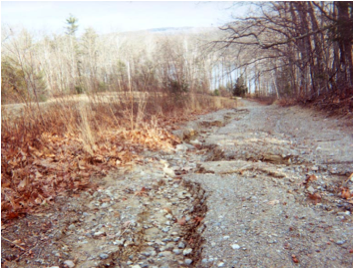
Camp roads are the other big
contributor to phosphorous input. By developing maintenance schedules which
would include periodic grading and culvert and ditch cleaning, the impact on the lake from these
camp roads can be mitigated.
|