Sediment Loading
| Sediment loading is the
process by which sediments and other nutrients can be brought into the lake
via erosion and rain events, both through tributaries and non-point
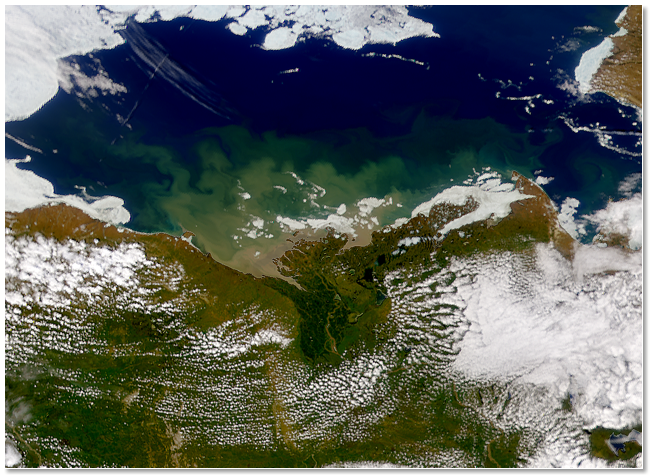
sources. This aerial photograph
of Mackenzie river in Canada is an extreme example of this process, however
it is a good visual representation of this process, as shown by this sediment
plume [Click for red oval].
These sediments and the other contaminants that are brought in during
rain events can have an impact on the water quality by affecting the color,
conductivity, transparency and total phosphorus of the lake. We are concerned in particular with
phosphorus because it is a limiting factor in phytoplankton growth, which
will also affect other parameters because the phytoplankton will reduce the
transparency in the water, and once the phytoplankton die, they sink to the
bottom, die and are decomposed, reducing the dissolved oxygen and releasing
more phosphorus into the water.
So to start, I would like to talk about the phosphorus levels found in
the tributaries. [Click for next slide] |