Compensation Philosophy
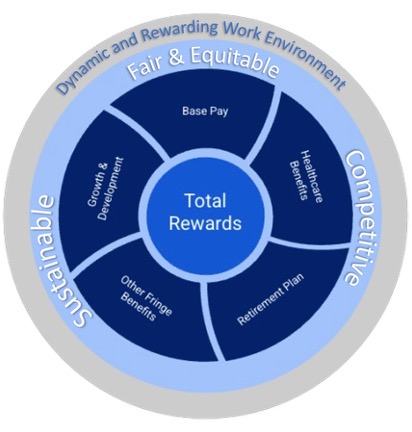
We are committed to providing competitive total compensation and benefits packages that attract, retain, and reward the talent needed to support our mission and vision. Our holistic view considers the College’s investments in base pay, healthcare cost sharing, retirement plan contributions, tuition benefits, and a range of other benefits the institution offers. The College continues to make significant investments in all these areas, particularly in healthcare, where it is subsidizing nearly 90 percent of the cost of medical plan premiums.
In addition to strong benefits, we are introducing a structured pay model that ensures fairness, transparency, and future growth opportunities for staff. Our philosophy is grounded in our goal of providing a dynamic and rewarding work environment in which each of our staff members are growing and contributing in meaningful ways.
Staff Compensation Structure
The College has a staff classification and compensation program designed to ensure internal equity, market competitiveness, and alignment with institutional values in base pay (salaried or hourly rate). Our goal is to promote transparency, support career growth, and provide fair and consistent compensation practices across all staff positions.
Base pay is informed by various factors including:
- Market data and benchmarking
- Internal equity analyses
- Institutional budget considerations
- Performance and contributions
- Role and responsibilities
Each staff position is assigned a classification based on a combination of factors including job responsibilities, required skills and qualifications, and scope and complexity of work performed. Classifications determine:
- Job Family and function
- Exempt vs. non-exempt overtime status
- Employment type (administrative or operational)
- Job level and associated salary grade and band
These classifications help ensure consistency in evaluating positions across departments and supporting equitable comparison across positions. Position classifications also serve as a key basis for the College’s staff base pay grade structure.
The College has developed a structure designed around pay grades and pay bands. This framework is intended to represent current Colby positions and provide future structure for new and changing positions. Pay grades and their associated pay bands reflect role complexity and required skills, internal job hierarchy, external benchmarking, and position classification.
Staff may progress within a pay band based upon depth and breadth of experience, acquisition of new skills, merit or market-based increases or advance to new bands through promotion or position reclassification.
You will find the pay table reflecting this pay grade and pay band structure here.
This model is used to:
- Support the annual staff compensation review process
- Establish compensation offers as part of the recruiting and hiring process
- Adjust position grade alignments based upon market shifts
- Monitor distribution of pay within and across the grade structure
Additionally, the pay grade and pay band structure is a living and breathing framework that will be continuously evaluated and adjusted based upon market and College needs.
You may find the set of Frequently Asked Questions of help in providing further information and clarification on the compensation model.
Managers and Supervisors may request an evaluation of a position classification for a member of their staff if responsibilities have significantly changed. The process includes:
- Submission of a reclassification request form
- Review by the Office of People Services
- Consultation with department and/or division leadership
Reclassification decisions are based on the nature of the work performed and not performance in a position to preserve the methodology behind the pay grade and pay band structure.
Staff Base Pay Grade Structure
Why is the College implementing a staff compensation model?
The College is committed to supporting staff in their essential work in enabling the achievement of the mission and vision. Developing and implementing this new model is a key foundational component of:
- Ensuring internal equity and consistency
- Aligning compensation with external market benchmarks
- Providing a clear structure for job classification and pay
- Supporting staff development and career advancement
How is the new staff compensation model different from what we have now?
The College has not had a formal staff compensation model in the past. Pay decisions were made individually without a standard structure. The new model introduces a clear grade system with salary ranges based on job responsibilities, market data, and internal equity. This brings more consistency, fairness, and transparency than before.
What is a Base Pay Grade System?
A base pay grade system is a commonly used system that organizes jobs into different levels, each with a corresponding compensation range to ensure fair and consistent compensation within an organization. It helps establish a clear hierarchy of pay based on factors like job responsibilities, skills, and experience.
What is a Salary Range?
Each grade level within the structure is associated with a compensation range with a defined minimum, midpoint and maximum salary for positions associated with that grade level. The pay range reflects the market value of positions within the grade. This structure allows for progression within a range based on several factors including performance, experience, and time in position.
How were the compensation bands developed?
The College engaged Willis Towers Watson, a leading global consultancy with deep expertise in workplace and workforce strategies, to partner with the Office of People Services as well as college leadership to develop this staff compensation model. Extensive work was done in evaluating job descriptions, job responsibilities, internal equity, and market competitiveness of all staff positions to create a balanced and sustainable structure that supports both individual and institutional goals. Willis Towers Watson utilized internal data provided by the College as well as extensive salary data to assist in the development of the grade structure and associated pay ranges. This was an iterative process with senior leadership deeply engaged in the evaluation of each position and its assignment in the model.
How does the new grade structure relate to the grade information I can see in my Workday profile?
The grade information currently visible in your Workday profile does not reflect your actual job classification or compensation level under the new structure. When Workday was first implemented, the grade fields were primarily used for administrative purposes, such as determining benefit eligibility, rather than for compensation planning.
With the implementation of the new grade structure, these fields will be realigned to accurately represent job levels and salary bands. Once the transition is complete, the information in Workday will be updated to match the new framework.
How will I know what compensation band my position is aligned to in the pay model?
The grade and pay range structure is currently being configured in Workday. Individual grade and pay range details will be visible in individual Workday profiles on September 1, 2025, allowing staff to view their classification at any time.
Will my salary change because of this new system?
The College has been utilizing insights gained through this work to direct investments as needed to better align positions within the assigned grade and pay structure. The College has made a concerted effort to ensure all staff positions are within the range of their assigned grade. The future increases will align with institutional practices around merit, market adjustments, or promotions.
What if my salary is above the maximum of my new compensation band?
We have very few positions which are above the maximum of the compensation range assigned to their grade level. Being above maximum does not automatically mean an individual will not receive future adjustments in compensation. The model helps inform compensation, but it is a flexible model allowing the College to make compensation decisions based upon individual circumstance.
Will this system affect annual merit or performance-based increases?
The grade and pay range model is one data point, among others such as performance, contribution, promotion or expanded responsibilities, and new skills acquired, that will be considered during the annual staff compensation process.
How does this system support career development or progression?
The grade structure supports professional growth by providing paths to progress within a grade as well as to move up to new grade levels based upon changes in an individual’s job responsibilities, increased scope and complexity of responsibilities, skill acquisition, and depth and breadth of experience.
What staff positions were included in the development of the new compensation model?
All full and part time regular positions with the College were included in the process of developing the new model.
Will the Staff Base Pay Grade System be reviewed or updated in the future?
The staff pay grade system is a living framework. It will be reviewed regularly to ensure alignment with market conditions, institutional needs and workforce trends.
Who can I speak with if I have questions about my classification or compensation band?
Your People Services Operations Partner can assist with questions, clarifications, or individual concerns.
207-859-5510
or
207-859-5512
Understanding Classifications
What is the difference between exempt and non-exempt status and how is this determined?
Exempt vs. non-exempt refers to an employee’s eligibility for overtime pay under the Fair Labor Standards Act (FLSA). Exempt employees are generally paid a salary and are not entitled to overtime pay, while non-exempt employees are typically paid hourly and are entitled to overtime pay for hours worked over 40 in a workweek.
What is a Job Family?
A Job Family is a group of jobs within an organization that share similar characteristics, skills, levels of responsibilities and career paths. They typically represent a functional area within an organization such as People Services, Information Technology, Facilities, Finance, Marketing, Security, etc. The jobs are grouped together based upon the nature of the work performed, allowing for systematic organization and management of the workforce.
What is a Job Profile?
A Job Profile is a standardized approach to describing the key details of a position within an organization, including its responsibilities, required skills and/or experience, qualifications, and expectations. It serves as a reference for recruitment, employee evaluation, and career development.
What is a Position?
At Colby, a Position is the role within the College assigned to an individual staff member. A position is assigned various attributes in our system including full or part time status, reporting structure, location, etc.
What is a Business Title?
A business title is a customizable title used to reflect an employee’s specific role, scope, or responsibilities within their department. It is used for external-facing purposes, such as campus directories, email signatures, and organizational charts, to help communicate an individual’s role more clearly.
In contrast, job profiles, job families, and positions are part of the College’s internal classification framework used within Workday to support organizational structure, compensation, reporting, and workforce analytics. These internal elements ensure consistency, equity, and accurate data across institutional systems.
Where can I find my assignment in the grade structure and the compensation range associated with that grade?
You can view your assigned grade and the compensation range for that grade directly in Workday:
- Sign in to Workday.
- Click your Profile photo → View Profile.
- Select Compensation.
- Under this section, you’ll see your Grade.
- Click the Grade Compensation Range tab to view the pay band, including the Minimum, Midpoint, and Maximum of your assigned grade.
For step-by-step guidance with screenshots, please see the Job Aid: View Compensation
Can my Job Profile change?
Job profiles may be reviewed and adjusted based upon a formal review process if responsibilities significantly evolve.
Pay Transparency
Beginning July 2026, job postings for salaried positions will include a hiring range representing the minimum of the salary grade through the midpoint of the range. For hourly positions with established starting rates, the posted compensation will reflect the starting hourly wage. Below you will find answers to anticipated questions about this enhancement to our recruiting process.
  Posted Range: The compensation range displayed in a job posting. For salaried positions, the posted range extends from the applicable salary grade minimum through the salary grade midpoint. The posted range does not independently authorize a hiring supervisor to offer compensation at any amount within that range.
Approved Hiring Range: The compensation range approved for a specific recruitment before the position is posted. It reflects the range within which the College reasonably expects to make an offer and may be narrower than the posted range. It is used internally to develop compensation recommendations and is not displayed in the job posting.
Salary Grade: The full compensation range assigned to a position based on its responsibilities, organizational level, and market value. It reflects the position’s compensation structure and potential salary progression over time. It is not the approved hiring range for a specific recruitment.
Salary Grade Minimum: The lowest salary established for positions assigned to a particular salary grade. For salaried positions, it serves as the lower end of the posted range.
Salary Grade Midpoint: The middle of the salary grade and a reference point used in compensation analysis. It serves as the upper end of the posted range but is not an automatic hiring target or authorization to offer compensation at that amount.
Fixed Starting Rate: A single established hourly wage used when all individuals hired into a particular position begin at the same rate.
Posted Hourly Range: The hourly compensation range displayed in a job posting when the position does not have a single fixed starting rate.
Approved Hourly Hiring Range: The hourly compensation range approved for a specific recruitment. It may be narrower than the posted hourly range and is used internally to develop starting-wage recommendations.
Internal Equity: Consideration of how a proposed salary or wage compares with the compensation of current employees performing comparable work, taking into account relevant differences in experience, responsibilities, and qualifications.
Compensation Exception: A proposed offer outside the approved hiring range or approved hourly hiring range. An exception requires additional review and approval through the College’s established compensation process before the amount is discussed with or offered to a candidate.
1. Purpose and Information Included in Postings
Why are we making this change?
This change is part of the College’s ongoing commitment to transparency, equity, and consistency in recruitment. It also aligns with State of Maine pay-transparency requirements and builds on work the College has already undertaken to strengthen its compensation practices and improve the candidate experience.
What compensation information will be included in job postings?
For salaried positions, job postings will generally include a posted range extending from the applicable salary grade minimum through the salary grade midpoint.
For hourly positions, the posting will list a fixed starting rate when one applies. If the starting wage may vary, the posting will include a posted hourly range.
Why does the College post the salary grade minimum through the midpoint?
The posted range gives applicants information about the broader compensation opportunity associated with the position. It also supports earlier and more productive conversations about compensation. The upper end of the posted range is not an automatic hiring target or authorization to offer that amount.
Who establishes the approved hiring range?
Before a position is posted, the Office of People Services will work with the hiring department and appropriate division leadership to establish the approved hiring range. The range will consider the position’s requirements, relevant market data, internal equity, available budget, and the College’s compensation framework.
Will the approved hiring range appear in the job posting?
No. The posting will display the posted range, fixed starting rate, or posted hourly range, as applicable. The approved hiring range is an internal range used to guide compensation recommendations for the specific recruitment and may be narrower than the range displayed in the posting.
2. Developing and Approving an Offer
Does the posted range authorize an offer at any amount within it?
No. Offers are generally expected to fall within the approved hiring range established for the recruitment. Any proposed offer outside the approved hiring range is a compensation exception and requires additional review and approval, even when the proposed amount remains within the posted range.
How is a candidate’s placement within the approved hiring range determined?
The Office of People Services develops compensation recommendations using job-related factors that may include:
-
Directly relevant experience
-
Education and specialized credentials
-
Knowledge, skills, and qualifications
-
Scope and complexity of prior responsibilities
-
Internal equity
-
Market competitiveness
-
Available budget
No single factor automatically determines a candidate’s placement within the approved hiring range.
What should happen if a candidate requests compensation above the approved hiring range?
The hiring supervisor should not approve or decline the request independently. The request should be referred to the Office of People Services.
People Services will evaluate the candidate’s job-related qualifications, internal equity, market conditions, available budget, and other appropriate factors and will coordinate any required approvals. No amount outside the approved hiring range should be discussed as a potential offer until the exception has been approved.
What happens if the College wants to offer compensation above the posted range?
The amount should not be discussed with the candidate until the Office of People Services has completed an additional review and obtained all required approvals.
People Services will also determine, in consultation with General Counsel when appropriate, whether the posting must be updated or the position reposted before an offer is made.
What happens if the approved hiring range changes during recruitment?
The hiring supervisor should contact the Office of People Services before discussing a revised range or compensation amount with candidates.
People Services will review the reason for the change, internal equity, available budget, and required approvals. If the change affects the accuracy of the posted range, People Services will determine, in consultation with General Counsel when appropriate, whether the posting must be updated.
Does a candidate’s current or previous compensation affect the offer?
The College does not rely on a candidate’s compensation history to determine an offer. Compensation recommendations are based on the position, the candidate’s relevant qualifications, internal equity, market considerations, and available budget.
3. Communicating With Candidates
Can hiring supervisors negotiate compensation directly with a candidate?
Hiring supervisors may discuss a candidate’s compensation expectations but should not promise, commit to, or negotiate a final salary or wage without coordinating with the Office of People Services. Any revised compensation proposal must be reviewed and approved before it is communicated as an offer.
Can hiring supervisors share the approved hiring range with candidates?
Hiring supervisors should focus candidate discussions on the compensation information included in the job posting. They should not communicate the internal approved hiring range or a specific salary commitment without consulting the Office of People Services.
What should a supervisor say if a candidate asks whether they could be hired at the top of the posted range?
A supervisor may respond:
The posted range provides information about the compensation opportunity associated with the position. Starting compensation is determined through a review of relevant experience, qualifications, internal equity, market considerations, and available budget. The Office of People Services completes that review before an offer is made.
Who should answer candidate questions about compensation?
Hiring supervisors may provide general information consistent with the job posting and this guidance. Questions involving the approved hiring range, potential exceptions, internal equity, or a specific compensation amount should be referred to the Office of People Services.
4. Internal Candidates and Other Recruiting Situations
How does this guidance apply to internal candidates?
The applicable compensation information will be included in postings available to internal candidates. The posted range does not guarantee an internal candidate a particular salary or percentage increase.
If an internal candidate is selected, the compensation recommendation will follow the College’s established review process and will consider the employee’s relevant experience, internal equity, and the nature and scope of the new responsibilities.
Does this guidance apply to promotions or transfers that are not competitively posted?
When a position is posted, the applicable compensation information must be included. Compensation for promotions, transfers, reorganizations, or other employment actions that do not involve a job posting will continue to be handled through the College’s established compensation review and approval process.
How will additional compensation be addressed in a posting?
When applicable, a posting may separately describe other compensation associated with the position, such as shift differentials, stipends, commissions, or other established payments. These amounts are separate from the posted base salary or hourly range unless otherwise stated.
What if a position is advertised by an external search firm or on another website?
The same compensation information must be included when a College position is advertised through an external search firm, recruitment agency, job board, or other third party. Hiring departments should work with the Office of People Services to ensure external postings remain accurate and consistent.
5. Impact and Additional Support
Does this change affect the College’s compensation philosophy?
No. This change does not alter how compensation decisions are made. It increases transparency by sharing compensation information earlier in the recruitment process while continuing to use the College’s established compensation framework and approved hiring ranges to develop final compensation recommendations.
How does this benefit recruitment?
Providing compensation information upfront helps:
-
Give applicants a clearer understanding of compensation before they apply
-
Encourage more productive salary conversations earlier in the hiring process
-
Reduce late-stage misalignment regarding salary expectations
-
Strengthen the College’s ability to attract qualified candidates
-
Reinforce the College’s commitment to transparency, fairness, and an excellent candidate experience
Will additional resources be available for hiring supervisors?
Yes. The Office of People Services will update recruitment materials and provide additional guidance as these changes are implemented. Supervisors are encouraged to contact the Office of People Services with questions about compensation discussions, approved hiring ranges, or the compensation review process.