
INVESTMENTS DELIVER SIGNIFICANT, MEASURABLE RESULTS
In 2014, Colby took the unusual step of planning a series of investments in the College and the community to ensure both would grow together, in synergy, to create a stronger Central Maine and a stronger Colby. An independent assessment created a baseline upon which to measure the impact of those investments then and over time.
That study found Colby’s efforts from 2014 through 2018 were beginning to reshape Waterville’s economic trajectory, helping to counteract regional challenges such as stagnant population growth, a shrinking labor force, and a declining tax base. At the same time, it raised important questions that could only be answered over a longer horizon.
This second study, covering fiscal years 2019 through 2024, provides clear answers. Colby has built on the momentum of its initial investments and translated strategic growth and community engagement into measurable economic results—supporting jobs, fostering business growth, fueling the revitalization of Waterville, and contributing substantially to Maine’s economy.
The findings illustrate how a sustained, intentional partnership between an institution and its community can serve as a powerful model for lasting economic vitality—broadening opportunity, strengthening local resilience, and positioning Waterville and Maine, along with similar communities nationwide, for long-term success.

“Job creation, business development, and population growth are essential to Maine’s future, and that begins with strong communities. This report provides evidence that institutions can provide both catalytic and supportive roles to ensure all of Maine—not simply Portland and the coastal vacation centers—can plan for and benefit from a strong economy that benefits individuals and small businesses.”
– President David A. Greene
MAKING AN IMPACT
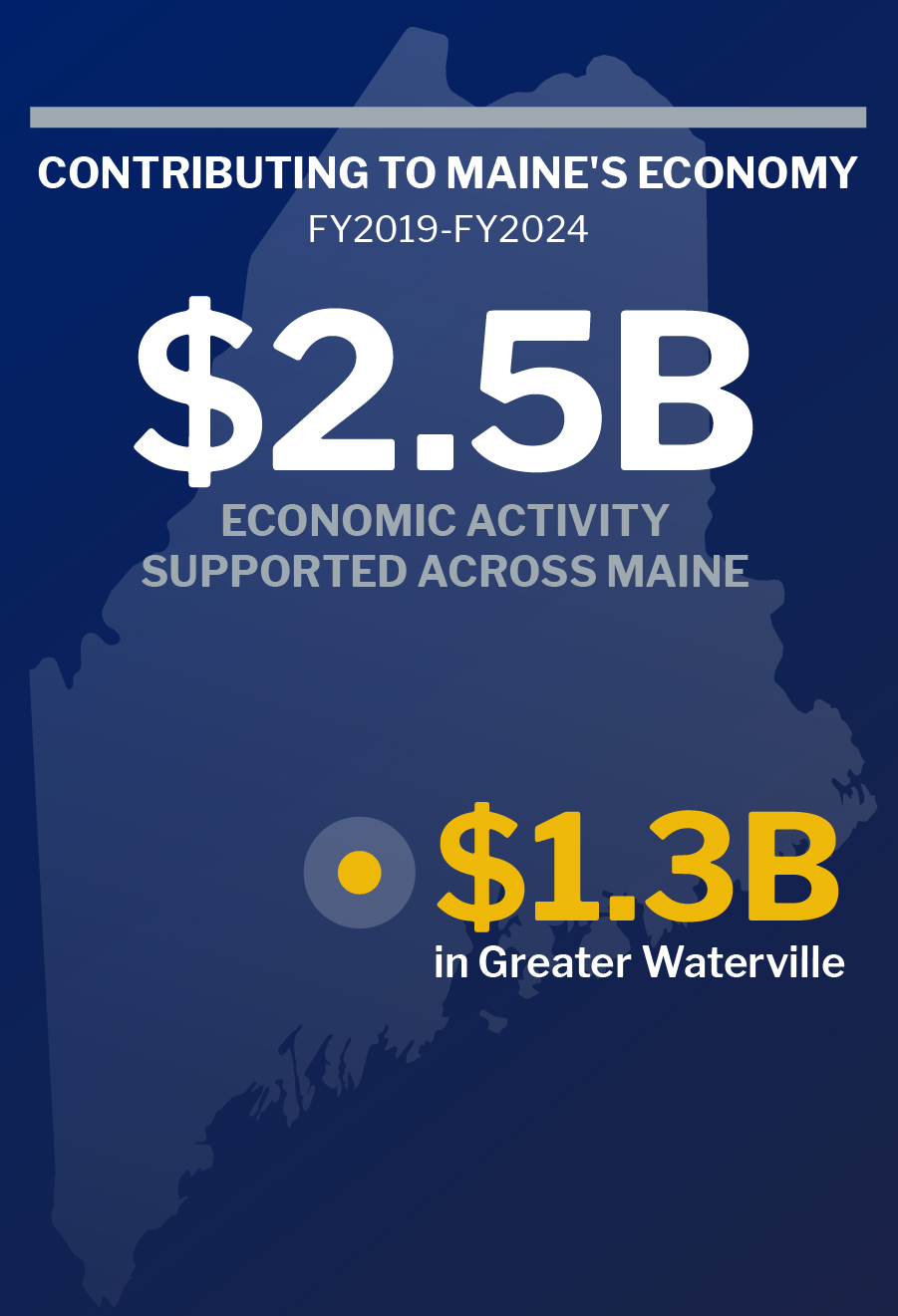
Colby has long been an economic driver in the region, and this study shows that the scale of its community and statewide impact has expanded substantially over the last six years. From fiscal years 2019 through 2024, the College’s operations, vendor spending, capital investments, and student and visitor spending supported $2.5 billion in economic output across Maine, including $1.3 billion in Greater Waterville.
In fiscal year 2024 alone, Colby’s activities supported total output (sales) for Maine businesses of nearly $487 million, supporting over 2,900 jobs and $216 million in earnings (wages, salaries, and benefits).
DRIVING ECONOMIC ACTIVITY IN WATERVILLE
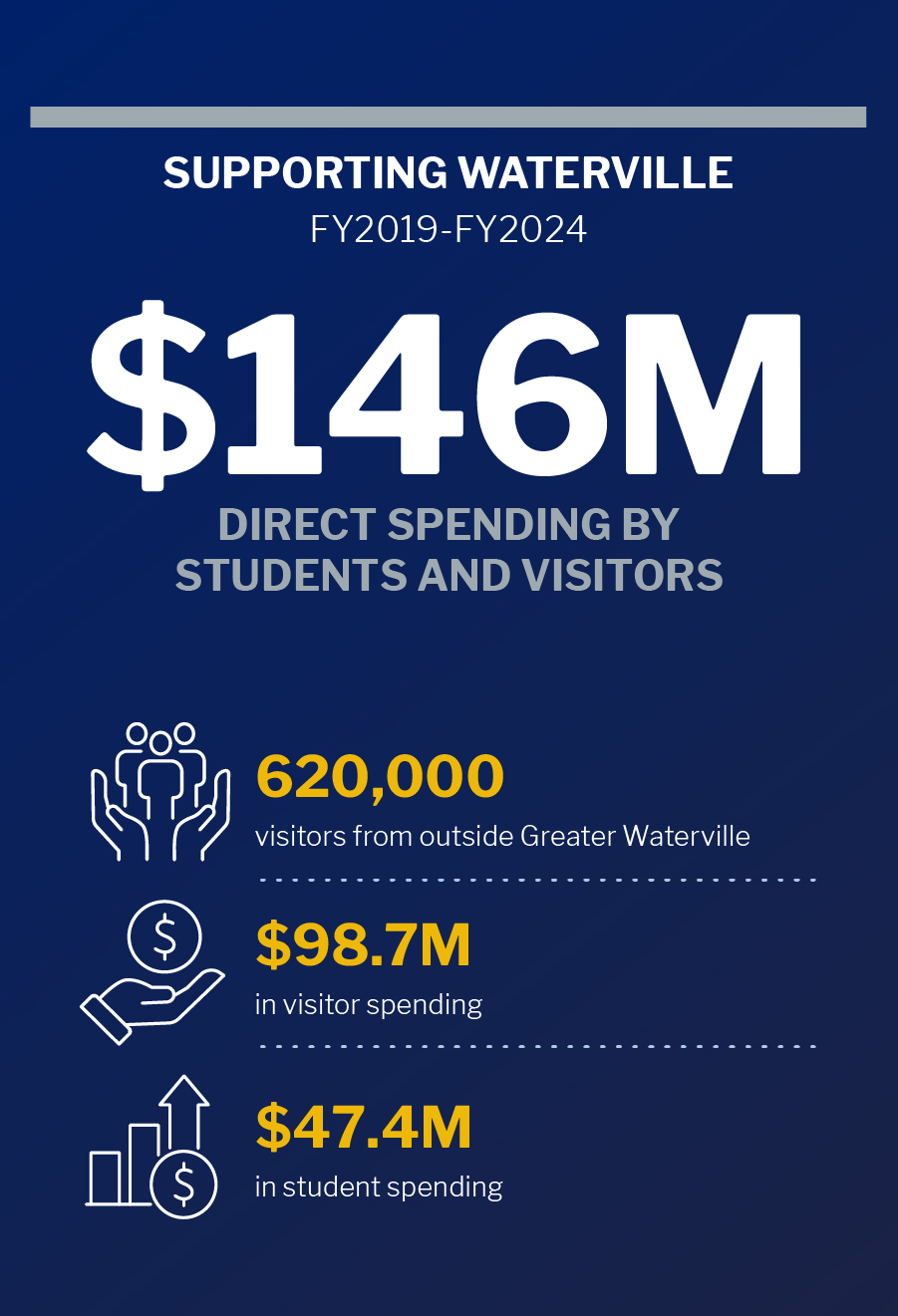
From fiscal years 2019 through 2024, Colby students and visitors spent $146 million in Greater Waterville, directly boosting the local economy. More than 620,000 visitors from outside the region came to Waterville for arts and cultural events, athletic competitions, alumni gatherings, institutional programs, and admissions tours, spending $98.7 million—a fourfold increase from the previous study. Student spending totaled $47.4 million, supported in part by a 14 percent increase in on-campus enrollment since fall 2018.
Colby’s downtown investments, including the Lockwood Hotel, Paul J. Schupf Art Center, and Bill & Joan Alfond Main Street Commons, have bolstered these impacts by attracting more visitors and connecting campus activity to Waterville’s revitalization.
STRENGTHENING MAINE’S WORKFORCE
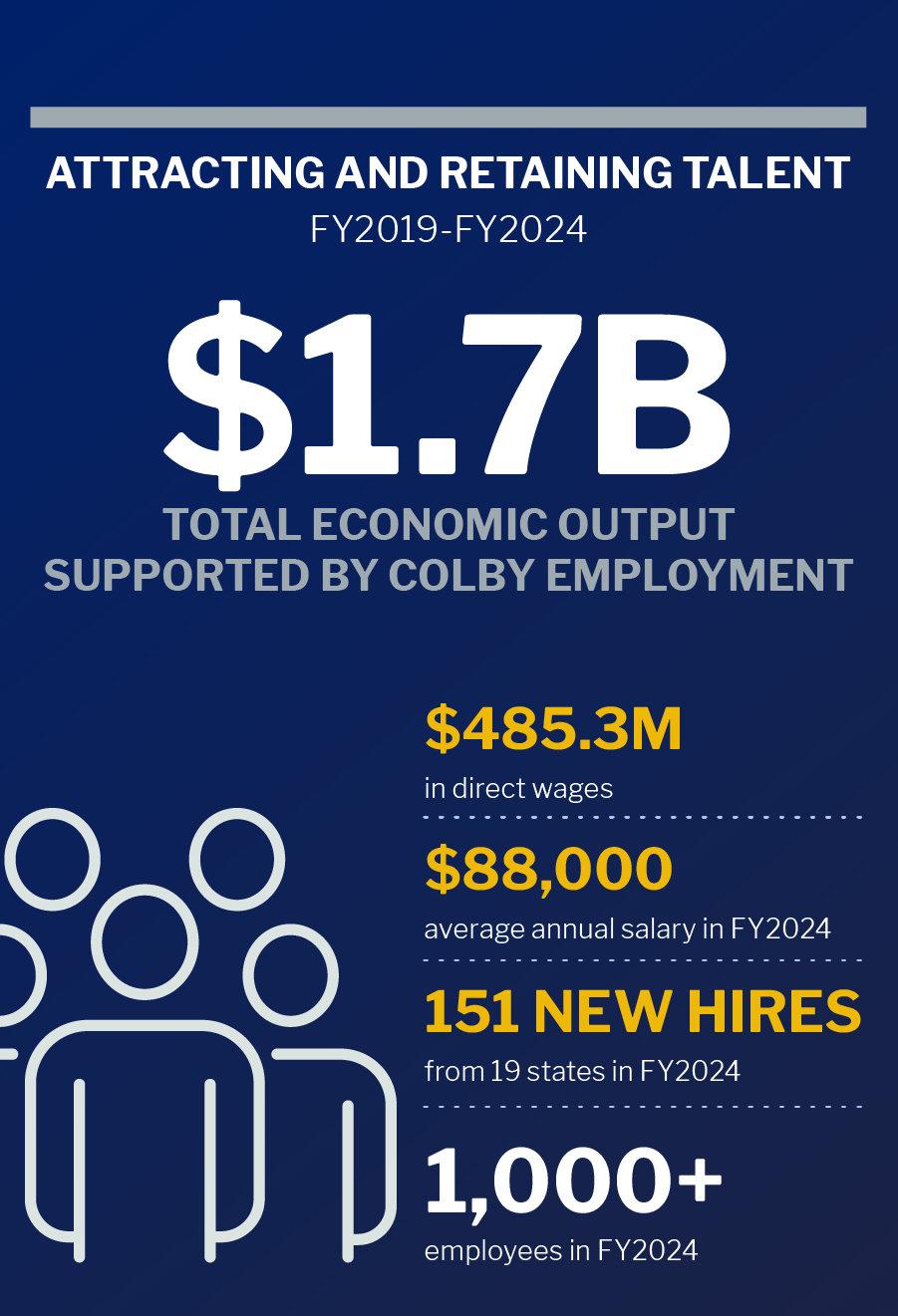
As one of Maine’s 30 largest private employers and the second largest in Kennebec County, Colby’s most direct economic contribution comes from the jobs it provides. Since the previous study, the College’s workforce has grown nearly 12 percent to more than 1,000 employees, with average salaries rising 39 percent since FY2018 to nearly $88,000 in FY2024.
From fiscal years 2019 through 2024, Colby paid $485.3 million in direct payroll, spending that circulated through businesses and services in Maine. When accounting for these broader effects, the College’s total employment contribution supported $1.7 billion in statewide economic output, including $1.1 billion in Greater Waterville.
With an aging population and a shrinking workforce, Maine’s economic future depends on attracting and retaining talent. In FY2024 alone, Colby hired 151 new employees from 19 states, with a median age of 34—significantly younger than the statewide median. Nearly 1,000 students completed professional experiences with Maine employers during the study period, and approximately 3,700 alumni now live in the state, most having relocated from elsewhere—expanding the pool of younger, highly skilled workers.
CONSTRUCTING STATEWIDE ECONOMIC GROWTH
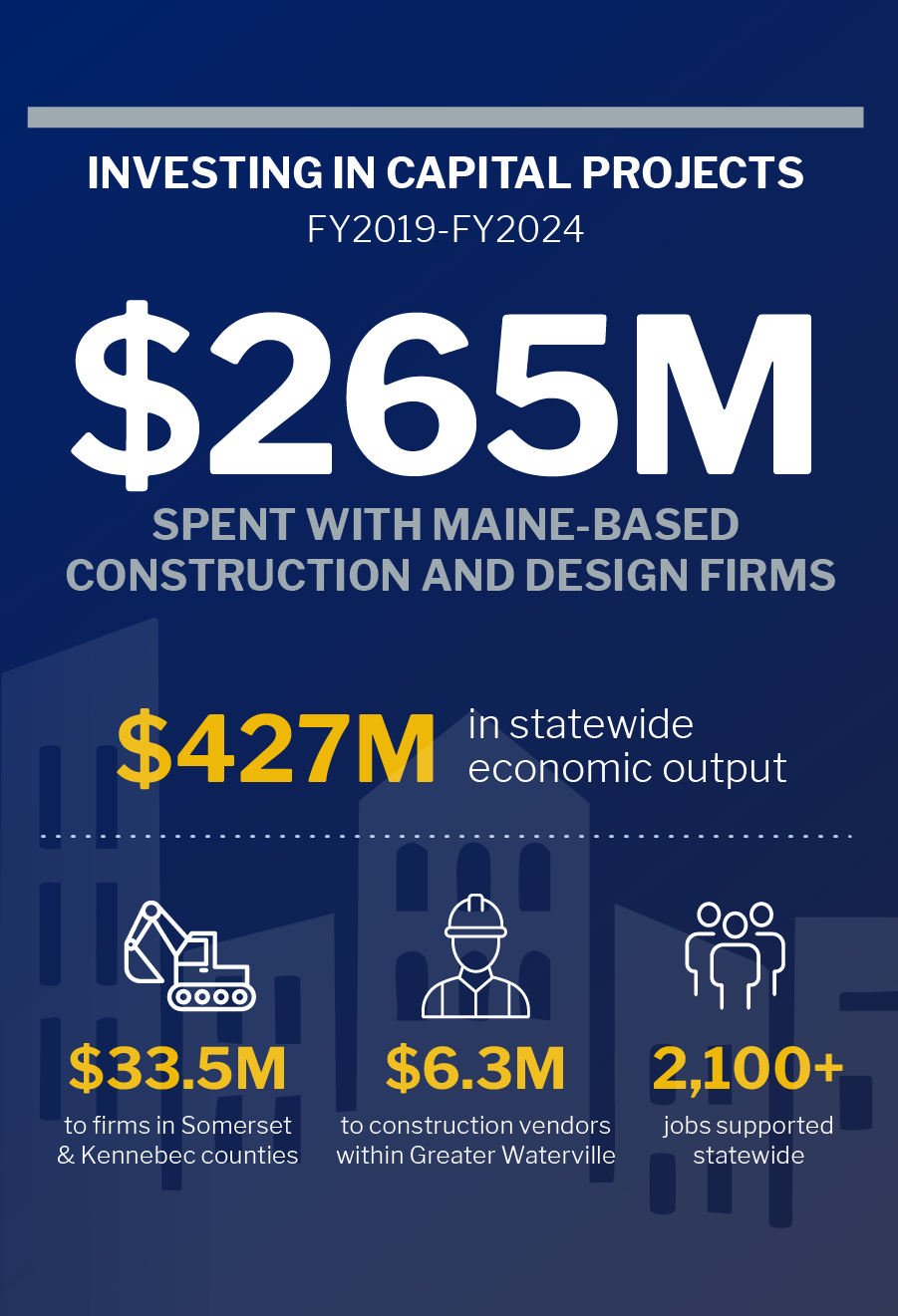
Colby’s capital projects generated substantial economic activity across Maine through direct construction spending, supply chain purchases, and household spending by workers. From calendar years 2019 through 2024, the College spent more than $265 million in capital improvements with Maine-based construction and design firms. These projects—ranging from new residence halls and academic buildings to community venues and hospitality spaces—included major investments both on campus and downtown.
Approximately $33.5 million of this spending went to firms in Kennebec and Somerset counties, including $6.3 million to vendors in Greater Waterville, reinforcing Colby’s commitment to local partnerships and regional development.
Over the six-year study period, capital projects supported more than 2,100 jobs statewide, generated $170 million in worker earnings, and contributed $427 million in total output. These figures reflect both the scale of Colby’s construction activity and the strength of its partnerships with Maine-based firms.